
Debt consolidation 2026: it lowers the payment nearly always, the cost rarely
Published · Author: Palvemax OY
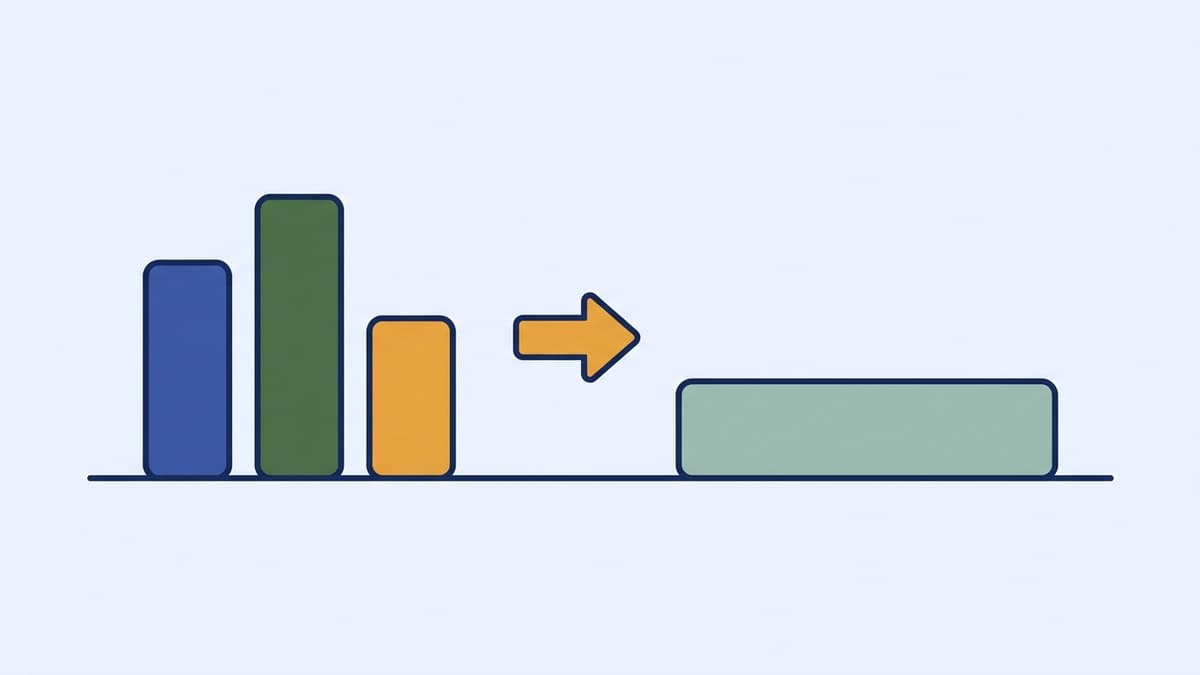
Sixteen thousand euros of debt across three credits, €600 a month in payments and rates from eight to twenty per cent. What is left to pay is €19,100, of which €3,100 is interest. Consolidating at nine per cent over three years cuts the payment to €509 and saves €783 in total.
The same consolidation over ten years cuts the payment to €203 – and costs €5,222 more than simply finishing off the existing credits. The payment fell by two thirds; the price rose by two and a half thousand. Below are the figures that show which of the two consolidation would do in your case.
- €16,000
- total debt in the example
- €19,100
- left to pay on current terms
- +€783
- saving if the new loan runs 36 months
- −€5,222
- extra cost if it runs 120 months
Two different questions that get confused
Consolidation is sold as a saving, but in the sales pitch the saving means the monthly payment. Those are two different things. The payment says how much money leaves this month. The total cost says what the debt will have cost by the time it is gone. Consolidation almost always shrinks the first and often grows the second.
The reason is the term. When three credits become one, the rate usually falls – but the repayment period stretches at the same time, because that is what produces the small payment. The longer period, with interest running on it, eats the rate saving and often more.
| New loan at 9 % | Monthly payment | Change in payment | Interest on the new loan | Overall difference |
|---|---|---|---|---|
| 36 months | €508.80 | −€91.20 | €2,317 | +€783 saved |
| 60 months | €332.13 | −€267.87 | €3,928 | −€828 more |
| 84 months | €257.43 | −€342.57 | €5,624 | −€2,524 more |
| 120 months | €202.68 | −€397.32 | €8,322 | −€5,222 more |
Only the first row is a real saving. On the other three, consolidation buys monthly breathing room and charges for it. That can be entirely the right decision – but it is a different decision from “I will save on interest”, and it is worth making with open eyes.
When consolidation is worth it
- When the average rate falls markedly. Credit-card debt at twenty per cent is almost always worth moving into a cheaper loan.
- When the term stays short. The same or a shorter repayment period than the current credits makes the saving real.
- When affordability is genuinely stretched. Then a smaller payment has value in itself, even at a cost – a payment default entry costs more.
- When there are many credits with scattered due dates. One due date means fewer missed payments and fewer late charges.
Equally, consolidation is not worth it if the current rates are already low, if the new loan carries a large arrangement fee, or if the term doubles. A loan at three per cent does not improve by moving into one at nine, however much the payment shrinks.
The arrangement fee and other costs
A new loan often carries an arrangement fee, which is added to the principal. It is invisible in the interest rate but visible in the total cost, and it belongs in the calculation before any comparison. The same goes for a monthly servicing charge: five euros a month on a ten-year loan is €600.
On an unsecured consolidation loan the nominal rate cap in 2026 is seventeen and a half per cent, and other credit costs may not exceed €150 a year. If the rate offered is higher than that, what you are being sold is not consolidation but a new expensive credit.
What a lender looks at in the application
Getting a consolidation loan is not a given: it is unsecured, and a pile of existing debts does not work in the applicant’s favour. A lender looks at three things – regular income, credit record, and the ratio of debt to income. A payment default entry usually blocks the loan outright, which is exactly why consolidation is worth considering before payments start slipping rather than after.
Do not fire applications at ten lenders at once. Every credit decision leaves an enquiry on your credit record, and a dense series of enquiries over a short period reads to the next lender as desperation. Two or three considered applications give you the same comparison without that side effect. A loan broker submits one application to several financiers at once, which is tidier in this respect – but find out the broker’s commission in advance.
The option people forget
Before consolidating, try something simpler: pay off the most expensive debt first and keep every payment where it is. In the example the twenty per cent credit is the smallest of the three and the most expensive. Direct every spare euro at it while leaving the other payments untouched, and the interest cost falls with no new loan, no arrangement fee and no new agreement.
That works while the current payments are still manageable. If they are not, consolidation or a payment plan with the lender is the right route – and the latter is worth asking about first, because it costs nothing.
Calculators for this topic
FAQ
Does debt consolidation save money?
It does if the average rate falls and the term does not stretch. In the example a 36-month consolidation saves €783, while a 120-month one costs €5,222 more than finishing off the existing credits.
Why does the payment fall while the cost rises?
Because the small payment comes from a longer term. The longer the loan runs, the more months interest is charged for, and that eats the benefit of the lower rate.
When is consolidation certainly worth it?
When high-rate debt such as a credit card is moved into a markedly cheaper loan and the repayment period does not grow longer than it already was. Then both the payment and the total cost fall.
Does the interest cap apply to a consolidation loan?
Yes, if it is unsecured consumer credit. The nominal rate cap in 2026 is 17.5 per cent and other credit costs may not exceed €150 a year.
Should the arrangement fee be counted in?
Yes. It is usually added to the principal, so interest is charged on it too. Compare offers using the APR, which includes the fee and the monthly charges.
Are there alternatives to consolidation?
Two. Paying off the most expensive debt first while keeping the other payments unchanged lowers the interest cost with no new loan. And negotiating a payment plan with your current lender costs nothing, so it is worth asking about before the due date.