
Cover letter templates
Cover letter (työhakemus) templates: 20 designs that match your CV
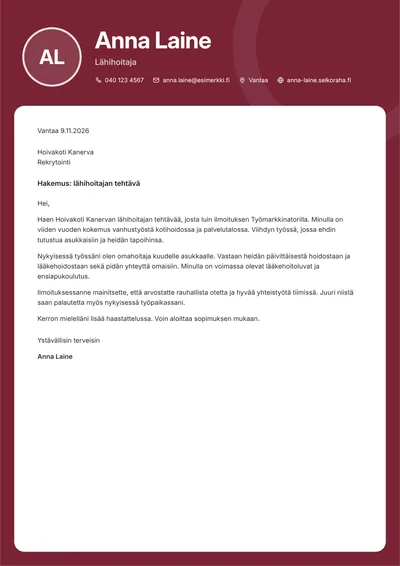
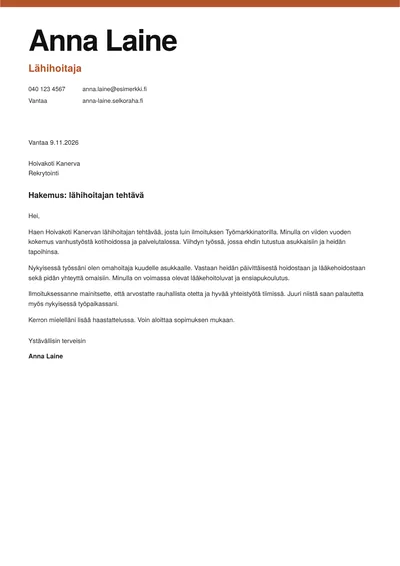
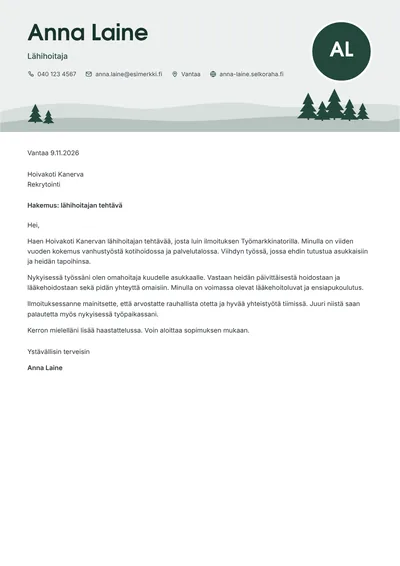
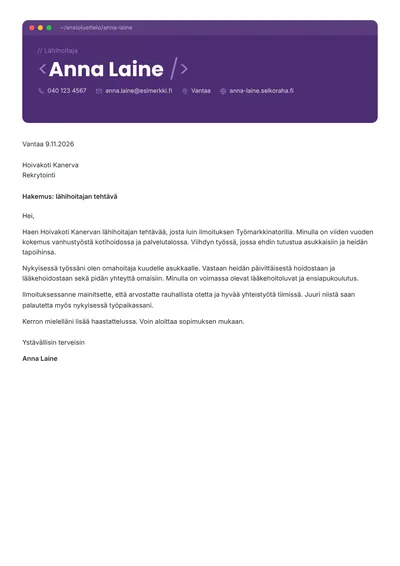
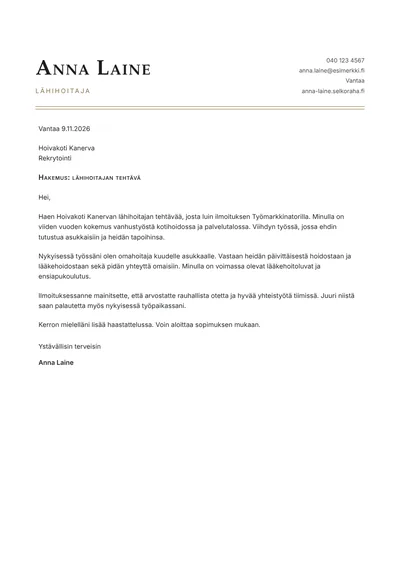
A Finnish cover letter (työhakemus) is one page at most. It says why you want this particular job, what you can do and what kind of employee you are. You always write it for the job you are applying for.
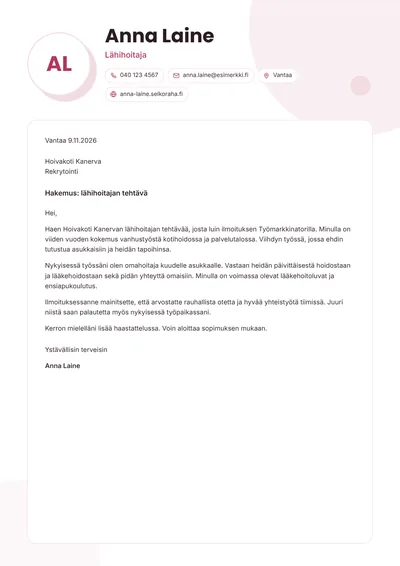
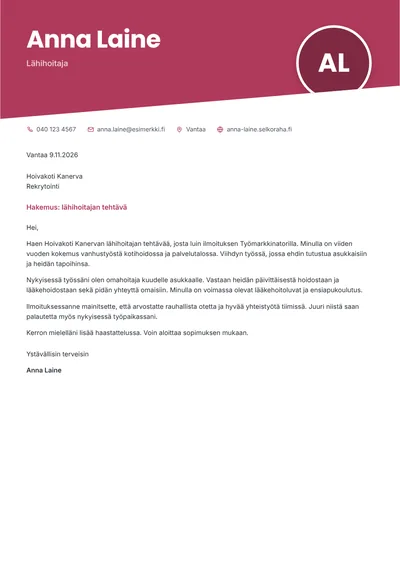
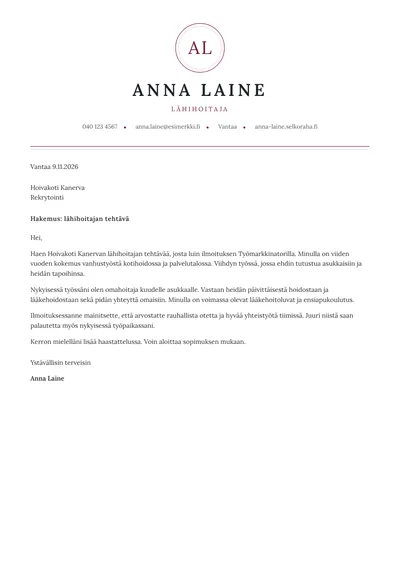
The templates already have the date, recipient, subject line, paragraphs and signature, and the design matches the CV. Editing is free, and the PDF without the watermark costs €3.90 for 7 days or €9.90 for 30 days.
Pick a cover letter template
The template opens in the editor on the letter, with sample text.
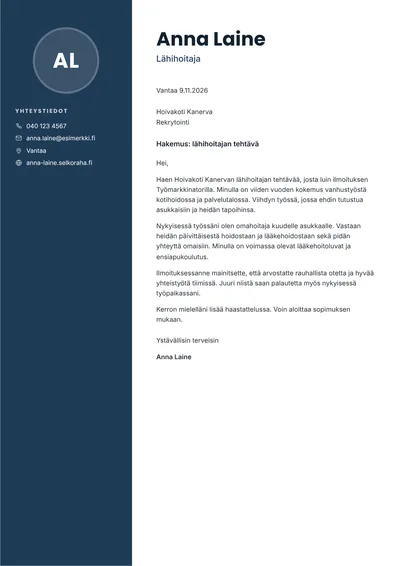
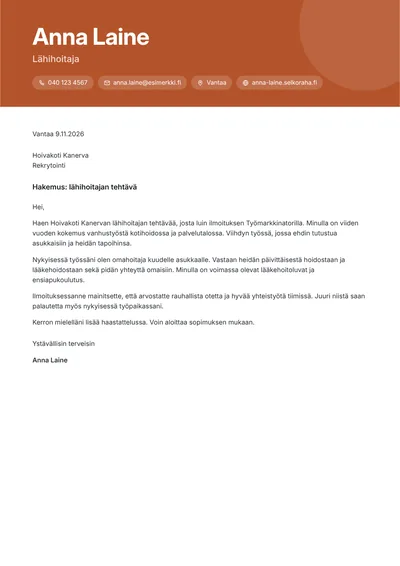
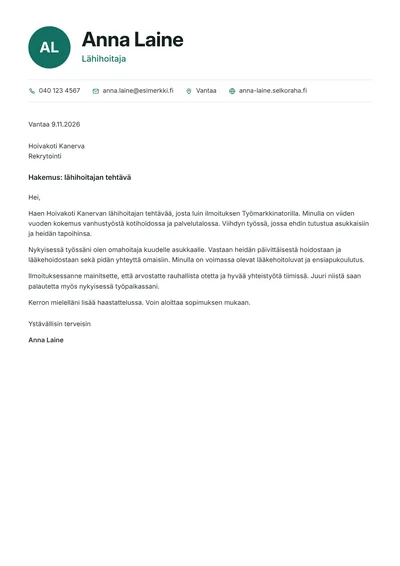
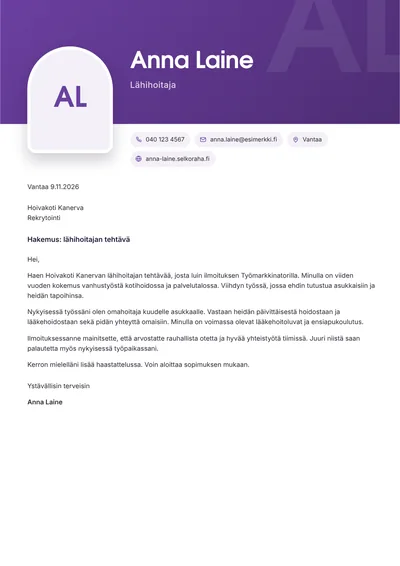
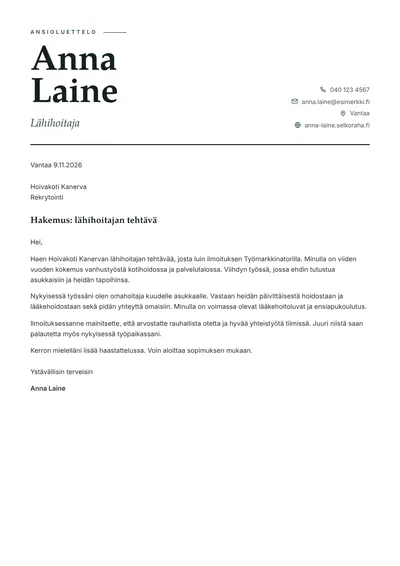
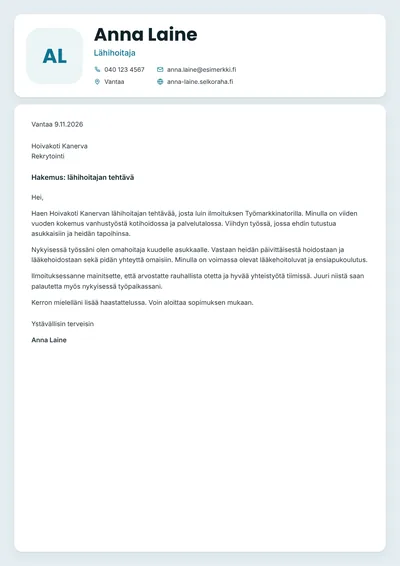
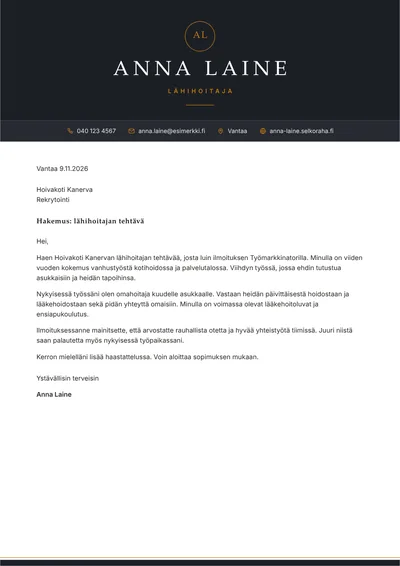
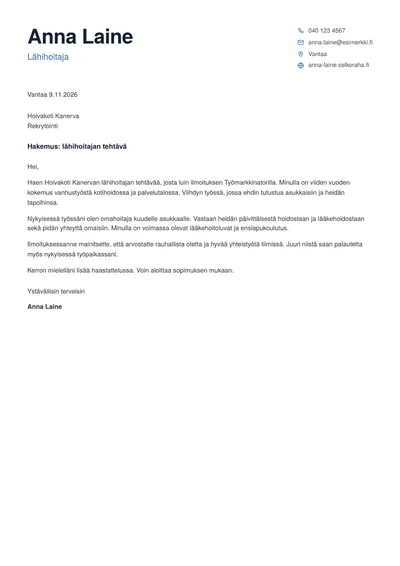
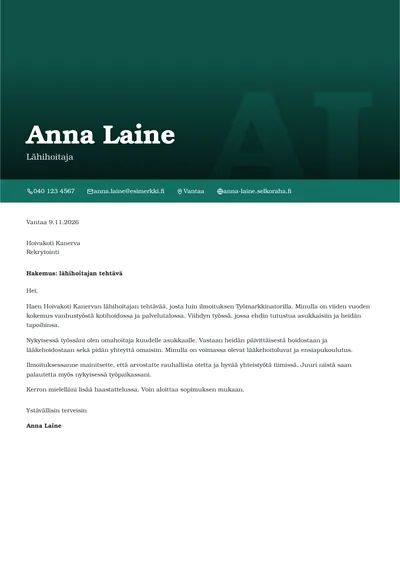
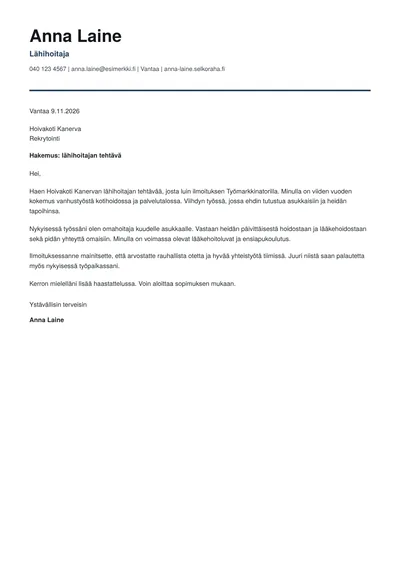
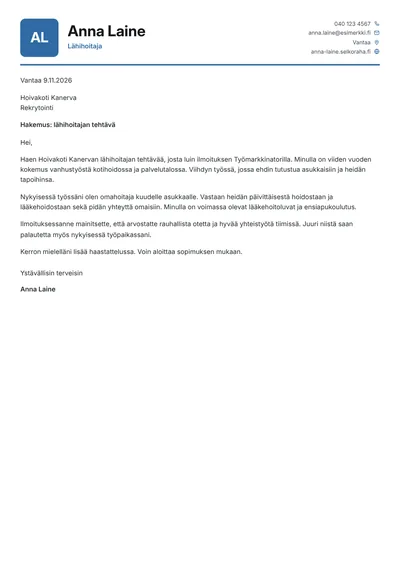
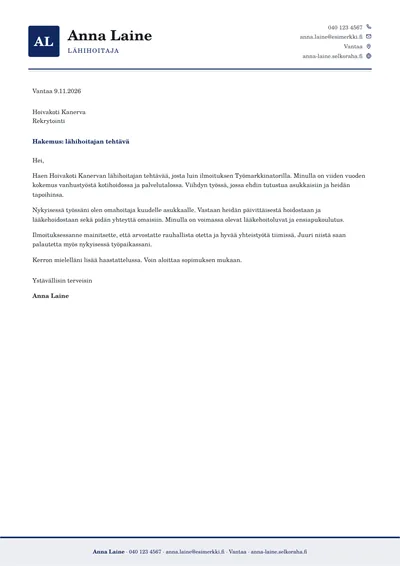
How a cover letter is built
- Subject line: the job you are applying for
- First paragraph: why this job and this organisation
- Second paragraph: what you can do, with concrete examples matched to the ad
- Third paragraph: what kind of employee you are
- Closing: a suggested next step, such as an interview, and your contact details
The letter has to fit on one page. The editor tells you if the text does not fit.
Questions and answers
How long should a cover letter be?
One page at most, as Finnish university career services advise. The editor warns you if the text does not fit on one page.
Is the cover letter template free?
You can edit and preview all 20 templates for free, but the preview carries a watermark. Access for 7 days costs €3.90 and for 30 days €9.90. While it lasts, you download the letter and the CV as PDFs without the watermark. There is no subscription.
Can I send the same letter to several employers?
Better not. Write the letter for each job and use the words of the ad. The template keeps the design, so for each application you only change the text.
What goes into an open application (avoin hakemus)?
You send an open application when the employer has not advertised a vacancy. Research the company first and say what kind of work you are looking for and what you could bring to it.
Should I state a salary request (palkkatoive)?
If the ad asks for one, put it in the letter. First check the minimum pay in the collective agreement (TES) and the pay level for the occupation, so the figure rests on data rather than a guess.