
What is left of a 1,000-euro invoice in Finland in 2026?
Published · Author: Palvemax OY
About 460 euros. VAT goes first, then the invoicing service fee, then the YEL contribution, and finally income tax – leaving under half. It catches out almost everyone sending their first invoice.
The figure is not the same for everyone: it depends on whether you are VAT-registered, whether you invoice through a service or as a sole trader, and what your confirmed YEL income is. Below is the whole chain euro by euro, the difference between the two routes, and the threshold that changes the arithmetic in one step.
- 25.5%
- general VAT rate
- €20,000
- VAT registration threshold / year
- 24.40%
- YEL contribution on work income
- ~46%
- of the invoice in hand
The chain, euro by euro
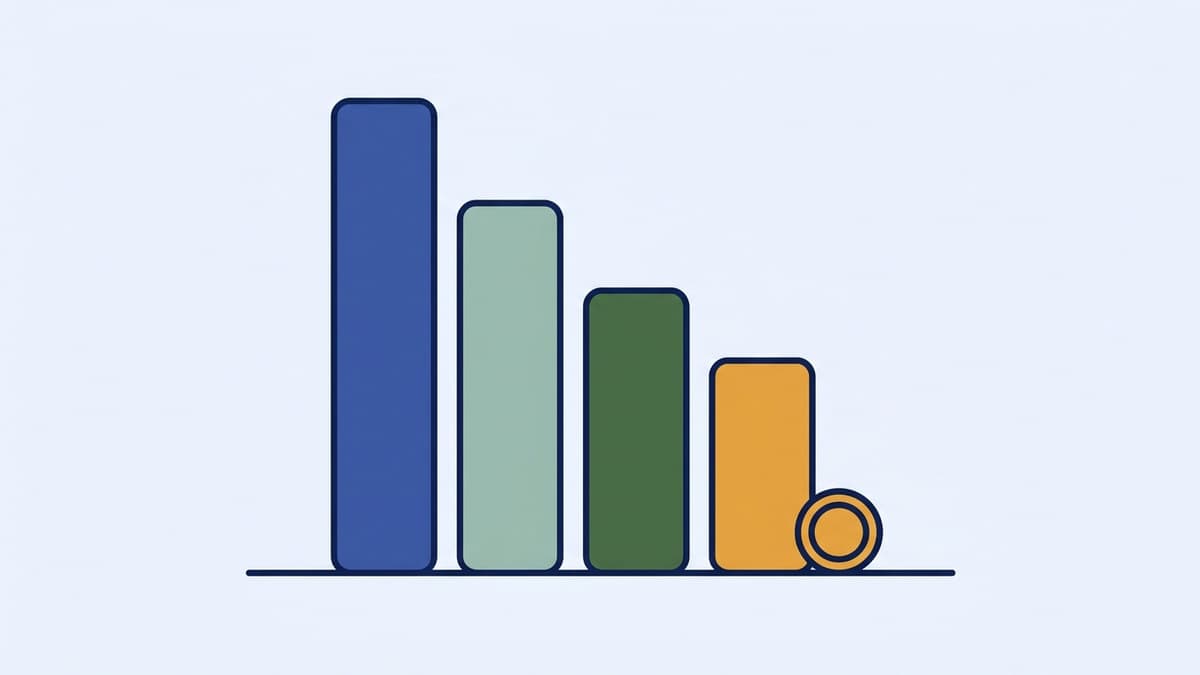
| Stage | EUR | Remaining |
|---|---|---|
| Invoice total | €1,000.00 | €1,000.00 |
| − VAT 25.5% | €203.19 | €796.81 |
| − invoicing service fee 5% | €39.84 | €756.97 |
| − YEL contribution 24.40% | €184.70 | €572.27 |
| − income tax about 20% | €114.45 | €457.82 |
The first deduction was never your money. VAT is paid by the client and remitted to the state; it merely passes through your account. So an invoice is best treated as VAT-exclusive sales from the outset: a €1,000 invoice is €796.81 of sales, not a thousand euros of income. Plenty of beginners build their income forecast from the wrong line and notice only when the VAT payment falls due.
The €20,000 threshold has two sides
VAT liability begins once turnover exceeds 20,000 euros in a calendar year. Staying under it means VAT-free operation, which sounds good – but you also cannot deduct the VAT on your purchases. If you buy a lot for the business, registering voluntarily can pay off at a lower turnover.
Crossing the threshold mid-year is where people get burned. Liability starts retroactively from the moment it is crossed, so VAT must be remitted on all sales from that point. If you have invoiced without VAT and can no longer charge it to the client, the tax comes out of your own pocket. Track turnover monthly, not at year end.
Light entrepreneur or sole trader?
| Light entrepreneur | Sole trader | |
|---|---|---|
| Intermediary fee | 3–5% of the invoice | none |
| Bookkeeping | handled by the service | your responsibility |
| Deducting expenses | limited | all business expenses |
| YEL | your responsibility | your responsibility |
| Business ID | not needed | needed |
| Suits | occasional invoicing | continuous activity |
The dividing line is how many expenses you have. A service fee is typically 3–5%, and it buys you bookkeeping and administration. A sole trader pays no fee but handles the paperwork, alone or through an accountant. With few expenses and occasional invoices, the fee is a cheap price for having nothing to do. If you buy tools, software or drive a lot, a sole trader’s deductions overtake the fee quickly.
YEL is the item people forget
The YEL contribution is 24.40% of confirmed work income, or 19.03% for a new entrepreneur during the first 48 months. The insurance is compulsory once the business runs for more than four months and work income exceeds 9,423.09 euros a year. This applies to light entrepreneurs too – the invoicing service usually does not arrange YEL for you, though many assume it does.
The contribution is not calculated from the invoice but from work income, which you set yourself and which must match the value of your labour. That same figure is the basis of your pension, your sickness allowance and your parental allowance. Understating it saves money now and cuts all of those later – and the Finnish Centre for Pensions can revise it upwards retroactively.
Run the calculation backwards
The same chain is worth reading in reverse. If your target is €2,500 in hand each month, then with €458 left from every €1,000 invoiced you need to bill roughly €5,500 a month. Across a hundred and twenty billable hours that is a little over €45 an hour – and that is the number worth saying out loud when a client asks about price.
The relationship is not quite linear, because earned-income tax is progressive and the YEL contribution follows work income rather than invoicing. At larger sums the tax share grows, so doubling what you bill does not double what you keep. Test your own target directly in the calculator instead of scaling one example upwards.
What the calculator does not know
The income tax share is an estimate. It uses the national average municipal rate, and an entrepreneur’s deductions are not identical to an employee’s: a sole trader’s profit is split into capital and earned income according to net assets, and a 5% entrepreneur deduction reduces the taxable amount. The final tax also depends on your other income. The calculator gives an order of magnitude, not a tax card.
Calculators for this topic
FAQ
How much of a €1,000 invoice is left?
For a light entrepreneur, typically about €460: VAT 25.5% (€203.19), service fee 5% (€39.84), YEL 24.40% (€184.70) and income tax around 20% (€114.45). A sole trader pays no fee but can deduct business expenses.
When must you register for VAT?
Once turnover exceeds 20,000 euros in a calendar year. Liability starts retroactively from the moment the threshold is crossed, so turnover is worth tracking monthly rather than at year end.
Is VAT my income?
No. VAT is paid by the client and remitted to the state; it only passes through your account. Base your income forecast on VAT-exclusive sales: a €1,000 invoice is €796.81 of sales.
What are the VAT rates in 2026?
General 25.5%, reduced 13.5% (food, restaurant meals, medicines, books, passenger transport) and 10% for newspapers and magazines only. The reduced rate fell from 14% to 13.5% on 1 January 2026.
Does a light entrepreneur pay YEL?
Yes, on the same terms as other entrepreneurs: once the business runs for more than four months and work income exceeds 9,423.09 euros a year. The invoicing service usually does not handle it for you.
Which is better, light entrepreneur or sole trader?
A light entrepreneur suits occasional invoicing and small expenses: a 3–5% fee buys convenience. A sole trader is better once expenses mount – the deductions overtake the fee quickly.