
VAT registration threshold 2026 — when must an entrepreneur register?
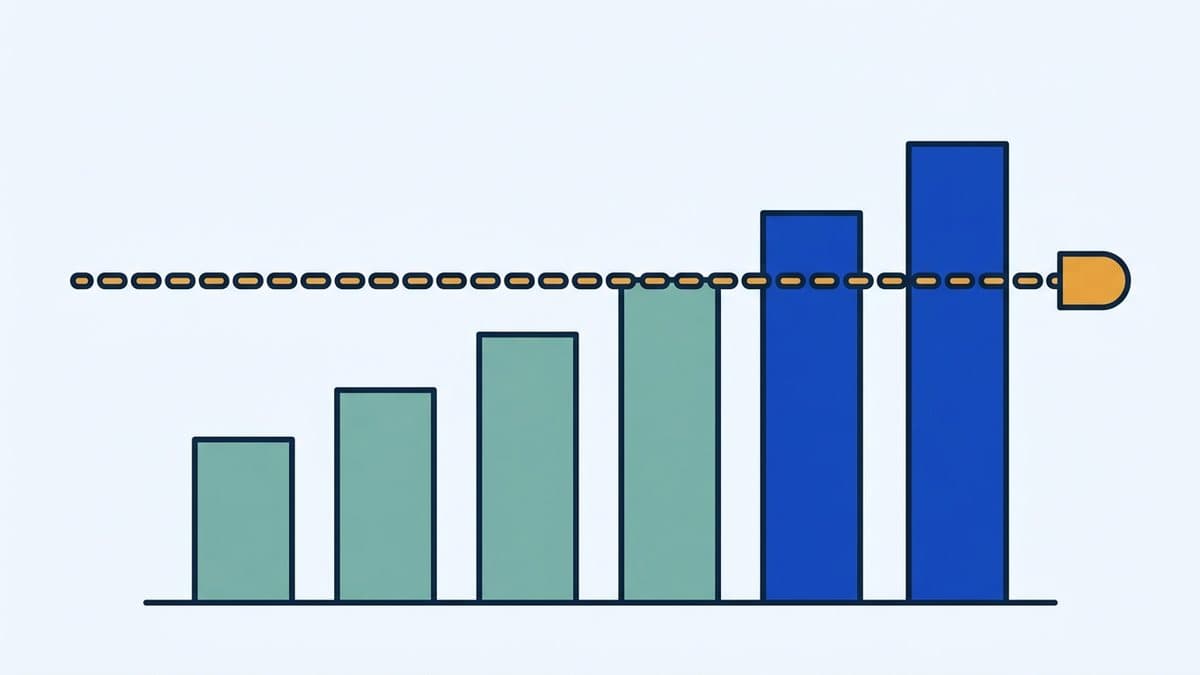
A business must register for VAT once its turnover exceeds 20,000 euros in a calendar year. The threshold rose from 15,000 euros on 1 January 2025. A small business staying under the threshold may stay outside the VAT register, but may also register voluntarily if it wishes.
When the threshold rose, the former lower-limit relief was abolished. Many guides online still mention the relief, but it no longer exists. Below is how the threshold is calculated, what crossing it mid-year means, and when voluntary registration is worthwhile.
- €20,000
- registration threshold / calendar year
- €15,000
- previous threshold (until 2024)
- 25.5 %
- standard VAT rate
- €0
- lower-limit relief (abolished)
What is the VAT registration threshold in 2026?
The threshold is 20,000 euros of turnover per calendar year. If a business turnover stays below this, registering for VAT is not compulsory. Once turnover exceeds the threshold, registration is mandatory. The threshold concerns turnover — sales excluding tax — not profit.
The threshold rose from 15,000 to 20,000 euros on 1 January 2025 and is the same in 2026. The former lower-limit relief, which tapered the VAT payable around the 15,000 euro mark, was abolished at the same time. The situation is now clearer: no VAT below the threshold, full VAT liability above it.
How is the threshold calculated?
The threshold is tracked as turnover over a calendar year. If activity began mid-year, turnover is converted to a full-year equivalent in proportion to the months of activity. The key is to estimate your own turnover in advance: if you see it exceeding 20,000 euros, register from the start of activity to avoid VAT being charged retroactively.
| Rate | Per cent | Examples |
|---|---|---|
| Standard | 25.5 % | most goods and services |
| Reduced | 13.5 % | food, restaurants, medicine, books |
| Reduced | 10 % | newspapers and magazines |
Is voluntary registration worthwhile?
Even if turnover stays under 20,000 euros, a business may register for VAT voluntarily. It is worthwhile if you buy a lot of taxable goods and services: a registered business may deduct the VAT on its purchases. It is not worthwhile if your customers are mostly consumers, in which case VAT raises your prices without giving you a deduction benefit.
- Register voluntarily if purchases are large and customers are VAT-registered businesses.
- Stay unregistered if you sell to consumers and buy little taxable — your prices stay lower.
- International trade and EU sales have their own rules regardless of the threshold.
- Voluntary registration binds you: you cannot leave the register immediately, at the earliest the following year.
Calculators for this topic
FAQ
What is the VAT registration threshold in 2026?
20,000 euros of turnover per calendar year. The threshold rose from 15,000 euros on 1 January 2025 and is the same in 2026. Below it registration is voluntary, above it mandatory.
Does the lower-limit relief still exist?
No. The lower-limit relief was abolished on 1 January 2025 when the threshold rose to 20,000 euros. Many old guides still mention it, but the relief no longer exists.
Is the threshold based on turnover or profit?
On turnover — sales excluding tax — not profit. If activity began mid-year, turnover is converted to a full-year equivalent.
What happens if the threshold is crossed mid-year?
VAT must be paid on the whole calendar year sales, not just the part above the threshold. That is why turnover should be estimated in advance and registration done in time.
Is voluntary registration worthwhile?
It is if you buy a lot of taxable goods and your customers are VAT-registered businesses, because you can deduct the VAT on purchases. It is not if you sell mostly to consumers.